Financial Comprehensive
Crypto's Future: Why Challenges Fuel Unstoppable Growth (Thoughts?)
 Avaxsignals Published on2025-12-07 Views2 Comments0
The DAT Era: Evolution or Extinction?
The Rise of Bitcoin Treasury Companies (DATs)
Okay, everyone, buckle up. We need to talk about Bitcoin treasury companies, or "DATs" as they're becoming known. Remember last summer? It felt like every other company was jumping on the bandwagon, piling into BTC, and watching their stock prices explode. It was a wild ride, fueled by what Galaxy Research called a "liquidity derivative"—basically, the idea that these companies' stocks were valuable because they held Bitcoin, and the more Bitcoin they bought, the more valuable they became.
The Fall From Grace: DATs Under Pressure
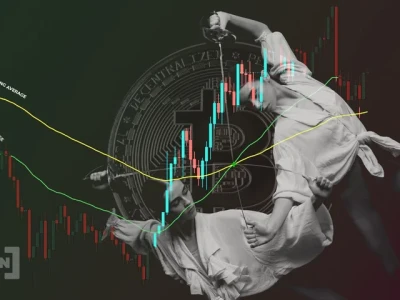
But, as we all know, what goes up must come down. And lately, oh boy, have these DATs been coming down. Bitcoin's tumble from its October highs around $126k to the recent lows around $80k (before rebounding to the $90k range) has really taken the wind out of their sails. Equity valuations that were once trading at premiums to their underlying Bitcoin holdings are now often trading at discounts. The high-beta treasury trade, as they say, isn't looking so hot anymore. It’s like the financial engineering that boosted them on the way up is now amplifying the downside. Remember that triple leverage? Operational, financial, and issuance leverage? It's a beast!
Real-World Examples: Metaplanet and Nakamoto
I’ve been watching this unfold with a mix of fascination and, frankly, a little bit of concern. As Galaxy Research pointed out, the core warning from their July report has come true: the reflexive cycle stalled once premiums tightened and equity issuance became dilutive, not accretive. It's not just a theoretical problem, either. Take Metaplanet, for instance. They were boasting over $600 million in unrealized profits in early October. Now? They're showing over $530 million in unrealized losses as of December 1st. That’s a swing of over a billion dollars in just a few weeks! And companies like Nakamoto, which jumped into the Bitcoin treasury game later in the cycle, have seen their stock prices absolutely decimated—down over 98% from their highs! It's memecoin-level volatility, and it's a stark reminder of the risks involved.
Three Potential Scenarios for DATs
The big question now is: what happens next? Galaxy Research lays out three plausible scenarios, and I think they're spot-on. First, the base case: premiums stay compressed. As long as the crypto market remains soft, most DATs will likely trade at flat or negative premiums to their net asset value. This means their ability to issue shares and buy more Bitcoin is severely limited and those once-beloved DAT equities will offer a levered downside, not upside, versus spot BTC. You shouldn’t expect that early 2025 "equity beta > BTC beta" regime to reappear without a full reset in risk appetite and Bitcoin making new highs.
Selective Survival and Consolidation
Secondly, selective survival and consolidation. This is where things get really interesting. This drawdown is a balance-sheet stress test, and the firms that issued the most stock at the highest premium, bought the most Bitcoin at cycle-top prices, and layered on debt against those holdings are going to be in a world of hurt. Prolonged discounts plus large unrealized losses are likely to create real solvency and governance pressure. Expect potential restructurings, stronger players (including Strategy) to be well-positioned to acquire weaker ones at a discount, or simply outlast them. It's a Darwinian phase, as Galaxy Research puts it, and only the fittest will survive. We can see this already with Strategy’s recent announcement of a $1.44 billion cash reserve. For years, Strategy has relied almost entirely on its BTC reserve and access to capital markets to manage liquidity. But with issuance conditions changing, the firm has now established a sizable dollar reserve (funded via at-the-market, or ATM, equity sales) to cover at least 12 months of dividend and interest commitments.
Optionality on the Next Cycle
And finally, there's the optionality on the next cycle. In principle, the treasury company trade isn't dead. If and when Bitcoin eventually prints new all-time highs, some subset of these companies will likely regain modest equity premiums and reopen the issuance flywheel. But the bar appears to be higher now. Boards and management teams are going to be judged on how they handled this first real stress test. Did they over-issue into the top? Did they preserve optionality? How did they handle the downturn? Are their shareholders willing to get back on for another ride? The key shift is that these companies now look less like simply "leveraged upside on BTC" plays and more like path-dependent instruments whose payoffs depend heavily on issuance strategy and entry timing.
Market Sentiment and the Santa Rally
The market has begun to shift from a risk-off environment toward a risk-on sentiment, partly due to the well-known Santa Rally, a phenomenon often observed in the crypto market as positions build ahead of the new year. Seasonal institutional rebalancing also frees up liquidity, encouraging increased exposure to higher-risk assets such as Bitcoin.
A New Dawn for Bitcoin?
But wait, it’s not all doom and gloom! News just broke that Bitcoin has consolidated one of its strongest sessions in months, registering a gain of more than 6% today alone, allowing it to reclaim levels above 90,000 dollars per BTC! This bullish bias has strengthened on the back of a renewed appetite for Bitcoin following the prolonged decline of recent weeks, along with growing appetite for risk assets, supported by expectations of a more relaxed tone from the U.S. central bank and the typical year-end optimism. If this increased appetite for risk continues to build, buying pressure on BTC could remain relevant over the next several sessions.
The Federal Reserve's Decision
Next week will bring the Federal Reserve’s final decision of the year, and expectations continue to favor a 0.25% rate cut, which would bring the benchmark rate down to 3.75%. This scenario has led to weaker demand for traditional safe-haven assets such as the U.S. dollar, opening the door for renewed interest